Skip to content
Nishanth B

> Building AI Infrastructure

Nishanth B

I build systems where AI outputs have consequences.

Smart contracts. Financial workflows. Operational decisions. When mistakes are expensive, generation isn't enough. Validation matters.

Founded NexOps (BCH-1 Hackcelerator winner, Top 5 finalist Cardano Hackathon Asia). Building Clawback Labs.

$10k Hackcelerator Winner • Cardano Top 5 / 3500+ • Ex-TVS SDE • 20+ NexOps Users

Projects · Achievements

Nishanth B, AI Infrastructure Engineer and founder of NexOps

Areas I Keep Returning To

  • Verification Systems
  • Developer Infrastructure
  • AI Reliability
  • High-Consequence Software
  • Human-in-the-loop AI

Flagship Project

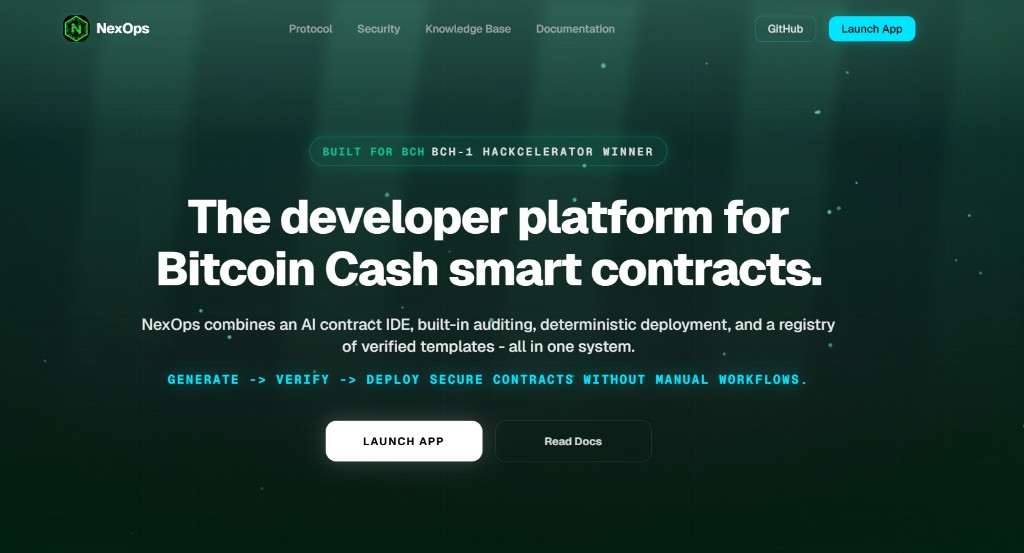
NexOps

AI-assisted smart contract engineering platform focused on deterministic generation, verification, and security.

Generation creates possibilities.
Verification creates trust.

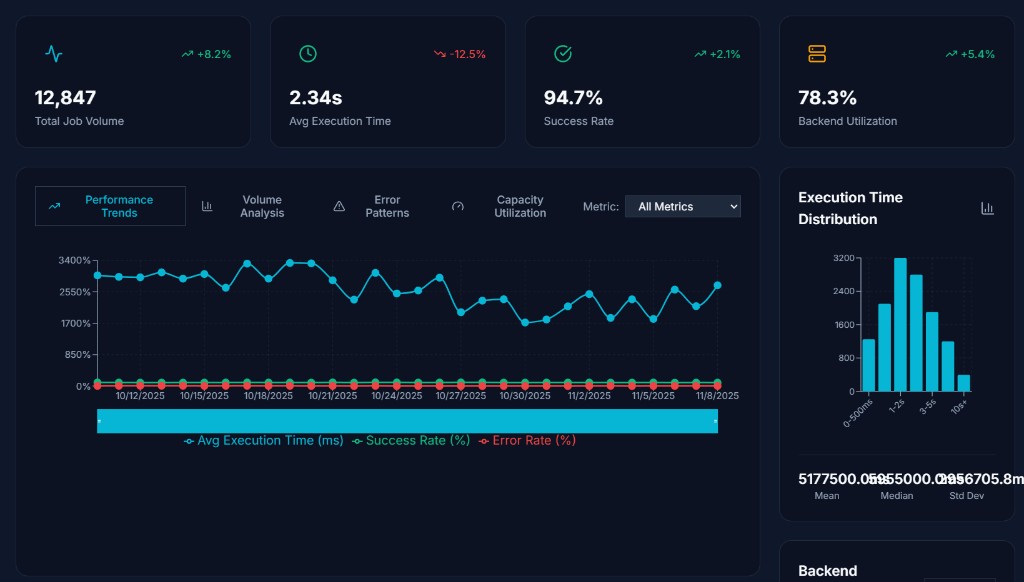
NexOps IDE with AI-assisted CashScript contract generation, deterministic validation, and security analysis
NexOps combines AI-assisted contract generation with deterministic validation, compilation, security analysis and benchmarking in a single engineering workflow.

Verification Pipeline

NexOps verification pipeline architecture diagram showing LLM generation and deterministic validation stages
Unlike prompt-only systems, NexOps treats LLM generation as one stage in a larger verification pipeline. Every generated contract passes deterministic validation before becoming an executable artifact.

Why NexOps Exists

Problem

Smart contract vulnerability analysis is either too slow or too inaccurate.

Manual auditing does not scale.

Traditional static analyzers generate false positives.

LLMs hallucinate and cannot be trusted without deterministic verification.

Why it mattered

Financial infrastructure cannot tolerate unreliable outputs.

A missed vulnerability can cost millions.

The challenge is not generating contracts.

The challenge is proving they are safe enough to deploy.

Engineering Approach

Instead of relying solely on prompting, NexOps converts ambiguous contract intent into structured specifications before constrained generation.

Generated contracts then pass through deterministic validation including DSL verification, compilation, security invariants, semantic checks and benchmarking before becoming executable CashScript artifacts.

The system was designed so verification—not generation—is the primary source of reliability.

Validation > Generation

Most generation failures were not caused by model intelligence.

They were caused by ambiguous specifications.

Once specifications became structured, verification mattered more than larger models or better prompts.

Results

30+

Contract Patterns

20+

Users

2

Project Teams

$10K

Hackcelerator Winner

98%+

Compile Success

Verification First

Architecture

Want to understand how the verification pipeline works?

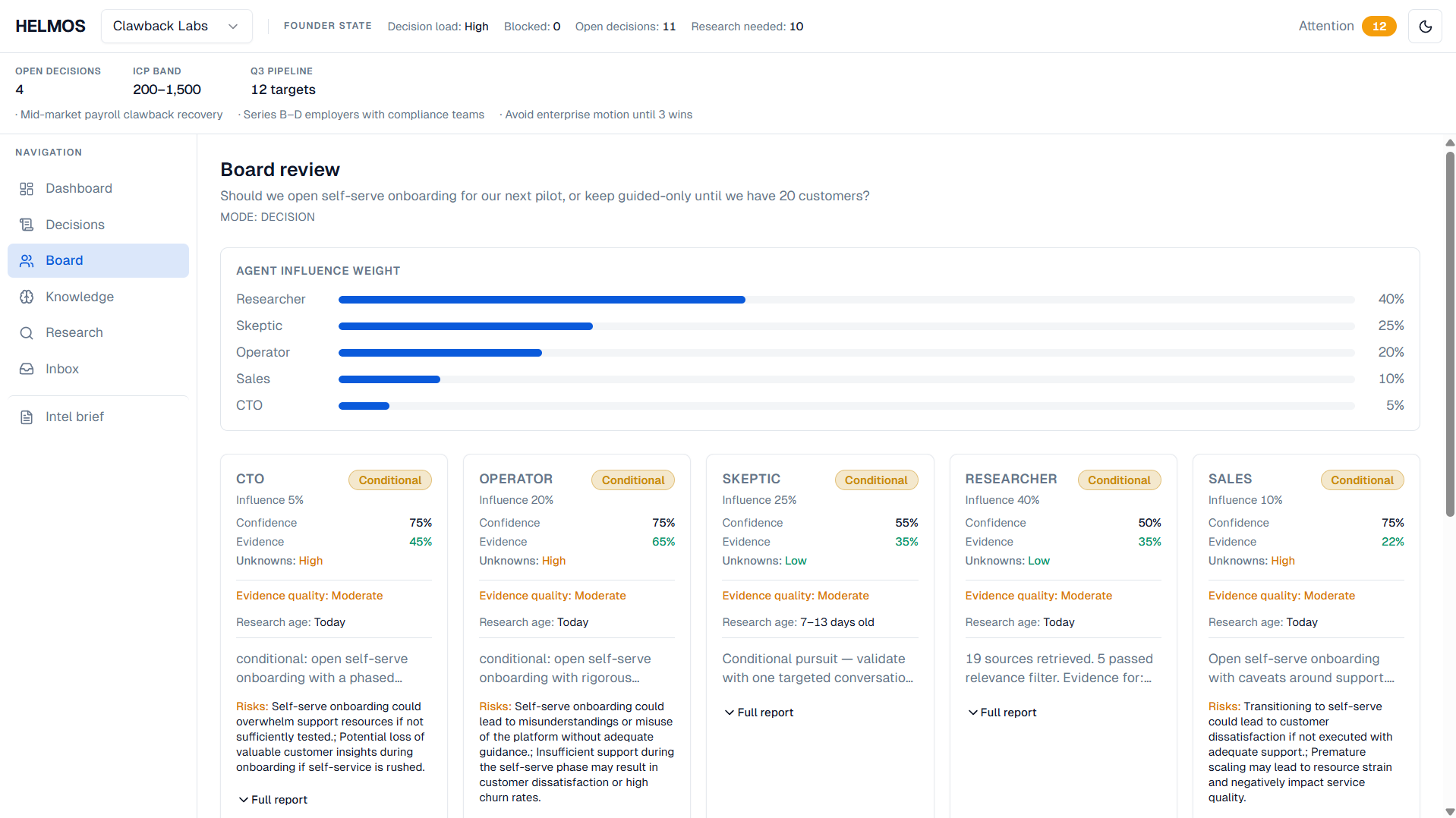
HelmOS

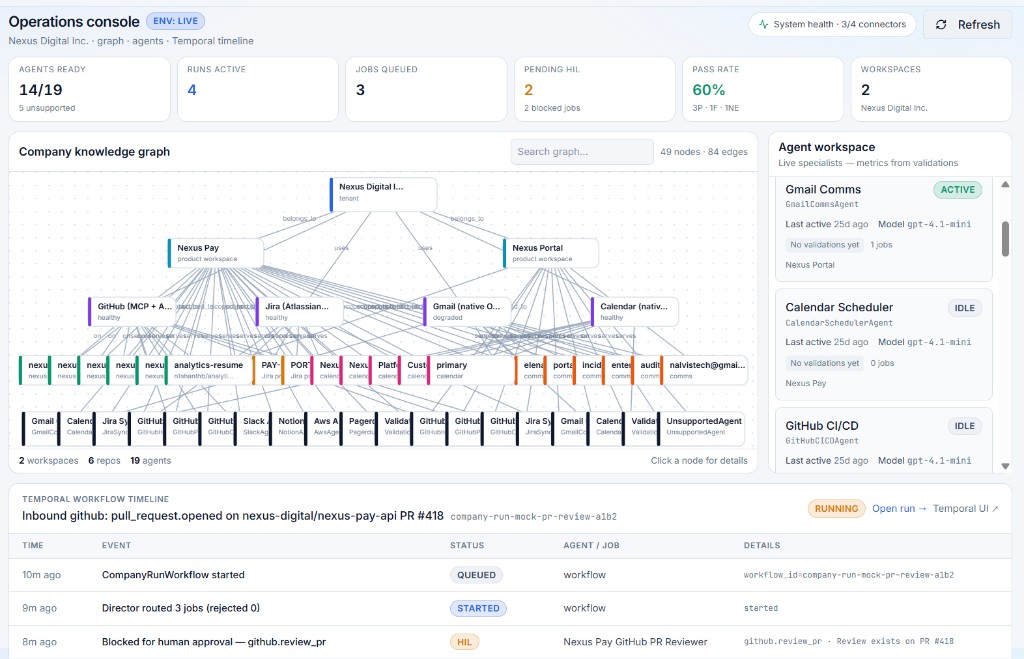
Built an AI-native founder operating system that coordinates specialized agents for research, planning, memory, and decision support. Focused on evidence, uncertainty, and recoverable workflows instead of autonomous execution alone.

Key takeaway: Useful AI systems expose uncertainty instead of hiding it.

HelmOS board review dashboard with agent influence weights and decision analysis for founder decisions

Problem

Most autonomous agent systems have no memory across sessions, no real planning capability, and no way to know when they're wrong.

Why it mattered

Building truly autonomous systems requires architectural sophistication. Orchestration, memory, feedback loops—these compound to create reliability.

What I built

An AI-native founder operating system that coordinates specialized agents to gather evidence, weigh tradeoffs, surface uncertainty, and support high-consequence decisions.

What I learned

Most agent systems are just orchestration. The hard part is knowing when they're wrong and recovering gracefully. Benchmarks beat demos.

Clawback Labs

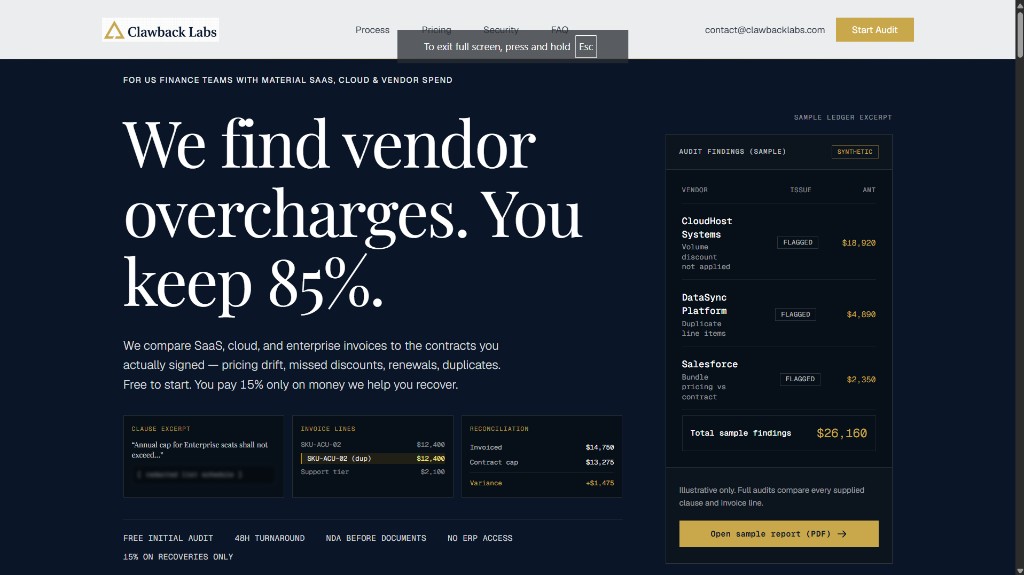
Building an AI-assisted invoice auditing platform that helps finance teams reconcile contracts against vendor invoices and identify billing discrepancies before payment through explainable verification workflows.

Key takeaway: Trust comes from transparent verification, not opaque predictions.

Clawback Labs AI-assisted invoice auditing and contract reconciliation interface

Problem

Invoice processing is slow and error-prone. Manual verification scales poorly. Duplicate invoices, incorrect amounts, and vendor mismatches slip through.

Why it mattered

Finance teams need a verification layer that catches errors before payment. Errors compound—a missed duplicate can hide systemic fraud patterns.

What I built

An invoice auditing platform that flags anomalies, validates against historical patterns, and generates reports with confidence scores. Built to be human-verifiable, not opaque.

What I learned

Most useful AI systems aren't the smartest. They're the most dependable. Reliability is a product feature. Not an engineering metric.

Things I Believe

01

Most AI products optimize for generation. The real challenge is verification.

02

Users don't care whether a workflow is agentic. They care whether it works.

03

Reliability is a product feature. Not an engineering metric.

04

Benchmarks reveal reality. Demos reveal potential.

05

The most useful AI systems are not the smartest. They're the most dependable.

Lessons Learned

01

Specifications > Intelligence

While building NexOps I learned that most generation failures weren't caused by model intelligence. They were caused by ambiguous specifications. Once the contract intent became structured, model quality mattered much less than validation quality.

02

Validation beats prompting

A good validator catches errors that clever prompts can't. A structured spec validator is the real leverage point.

03

Most agent systems are orchestration

With HelmOS I realized the hard part isn't planning or execution. It's knowing when they're wrong and recovering gracefully.

04

A benchmark is worth more than a demo

Demos hide edge cases. Benchmarks expose them. If you can't measure it, you don't understand it.

05

AI is cheap. Verification is expensive.

The real bottleneck isn't generation. It's knowing whether the output is correct. That's where the effort belongs.

06

Humans decode, machines verify

Your validation system should be interpretable to a human. Black box verification means users can't debug failures. Explainability compounds trust.

Achievements

BCH-1 Hackcelerator first prize winner announcement poster, 2026

Award

BCH-1 Hackcelerator Overall Winner

Built NexOps and won the overall BCH-1 Hackcelerator, receiving the $10,000 grand prize.

  • 🏆 Winner
  • 💰 $10,000
  • ⚡ NexOps
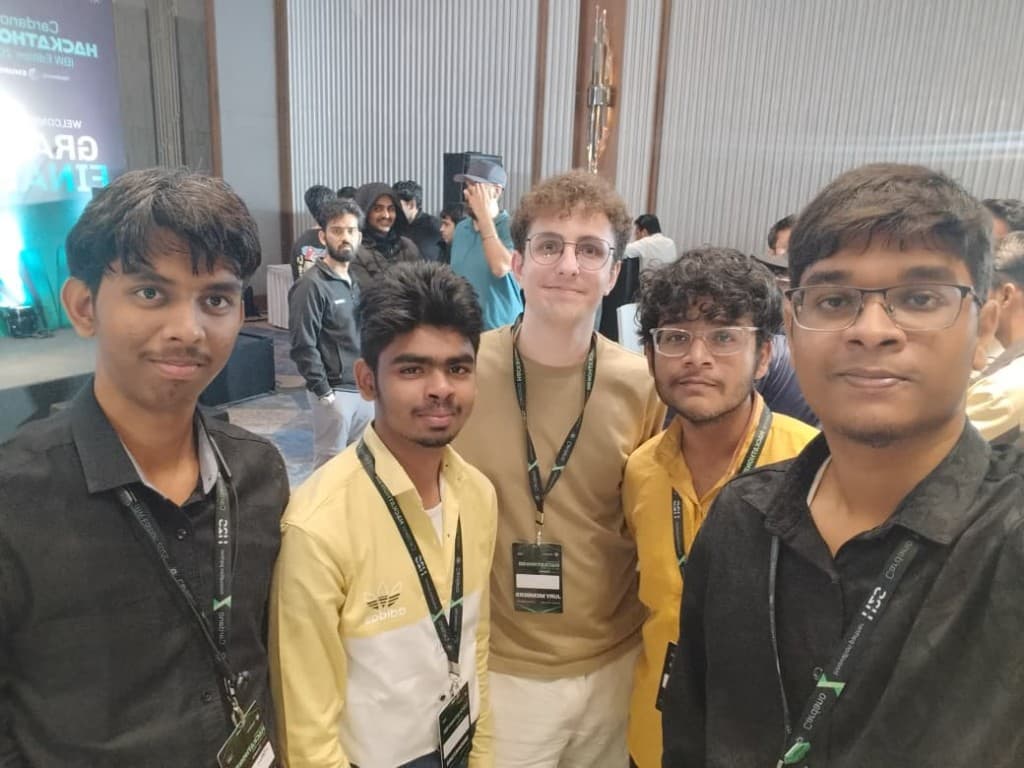
Nishanth B and team at Cardano Hackathon Asia grand finale, 2025

Competition

Cardano Hackathon Asia

Placed Top 5 in the General Track from 3,500+ registrations and 200+ finalist teams.

  • 🥇 Top 5
  • 🌏 Asia
  • 👥 3,500+
  • 🚀 200+ Finalists
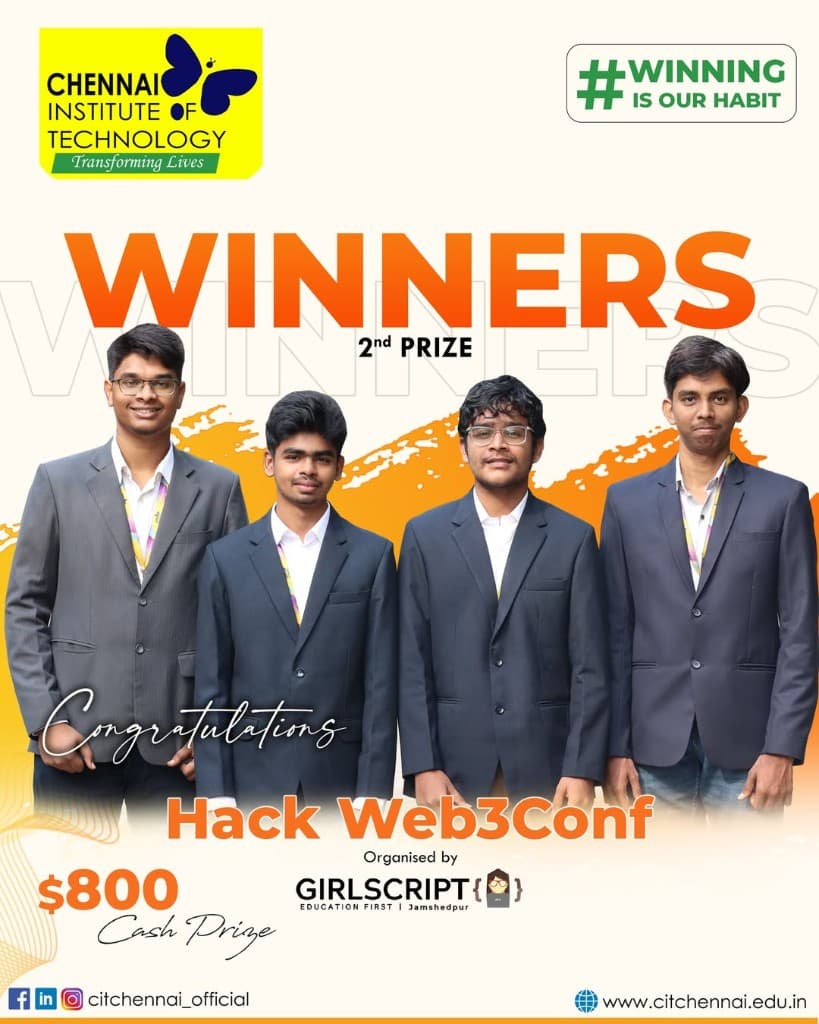
Hack Web3Conf second prize winner announcement poster, 2025

Award

Web3Conf'25 Prize Winner

Awarded for building blockchain infrastructure tooling.

  • 🏆 Prize Winner
  • 💵 $800
  • 🛠 Infrastructure

Experience

TVS Automobile Solutions

Software Development Engineer Intern

  • Built and deployed enterprise ticketing platform
  • Served 150+ support agents and 1,000+ monthly queries
  • Integrated AI-assisted workflows for support optimization

BrainGlobe

Open Source Contributor

  • 5 merged pull requests to research tooling
  • Python ecosystem contributions
  • Neuroscience research infrastructure tooling

Timeline

2024

Started building production software.

2025

First hackathon recognition.

2026

Shifted toward AI-native infrastructure.

Today

Building reliable AI systems.

Get in Touch

I'm interested in building AI infrastructure that people can trust in production. If you're working on developer tools, verification systems, or AI reliability, I'd love to talk.